
What to collect in Auttumn for Ecoprinting and Natural Dyeing
Autumn is a time to harvest and colect. Leaves, mostly, but also acorns, onion skins and whatever is about to go in the bin.
If you're curious about ecoprinting or natural dyeing and you're not sure what to start saving, this is the list I work from. Five things are for printing and five are for the dye pot. You don't need all ten. Choose what you can recognise near you.
A few ground rules
Only collect plants you can identify.
Collect where it is permitted, and leave plenty behind for wildlife.
Keep each kind separate and label it as you go.
Avoid anything recently sprayed.
Why collect now
I live in Portugal, where there is always something green to work with and eucalyptus is everywhere. But the trees that lose their leaves are already letting go of them, and I want a few of those for later.
You can ecoprint with dried leaves, so nothing has to be used the day you pick it. That matters when you come home with more than you have time for, which happens to me more often than I'd like
Collecting is also part of how I make. I use nature-printed and naturally dyed papers and fabrics in collage, journals and artist books, so a small store of materials means I always have somewhere to begin. Two or three kinds, kept apart and labelled, are enough to start getting to know what grows around you.
Printing or dyeing: two collections
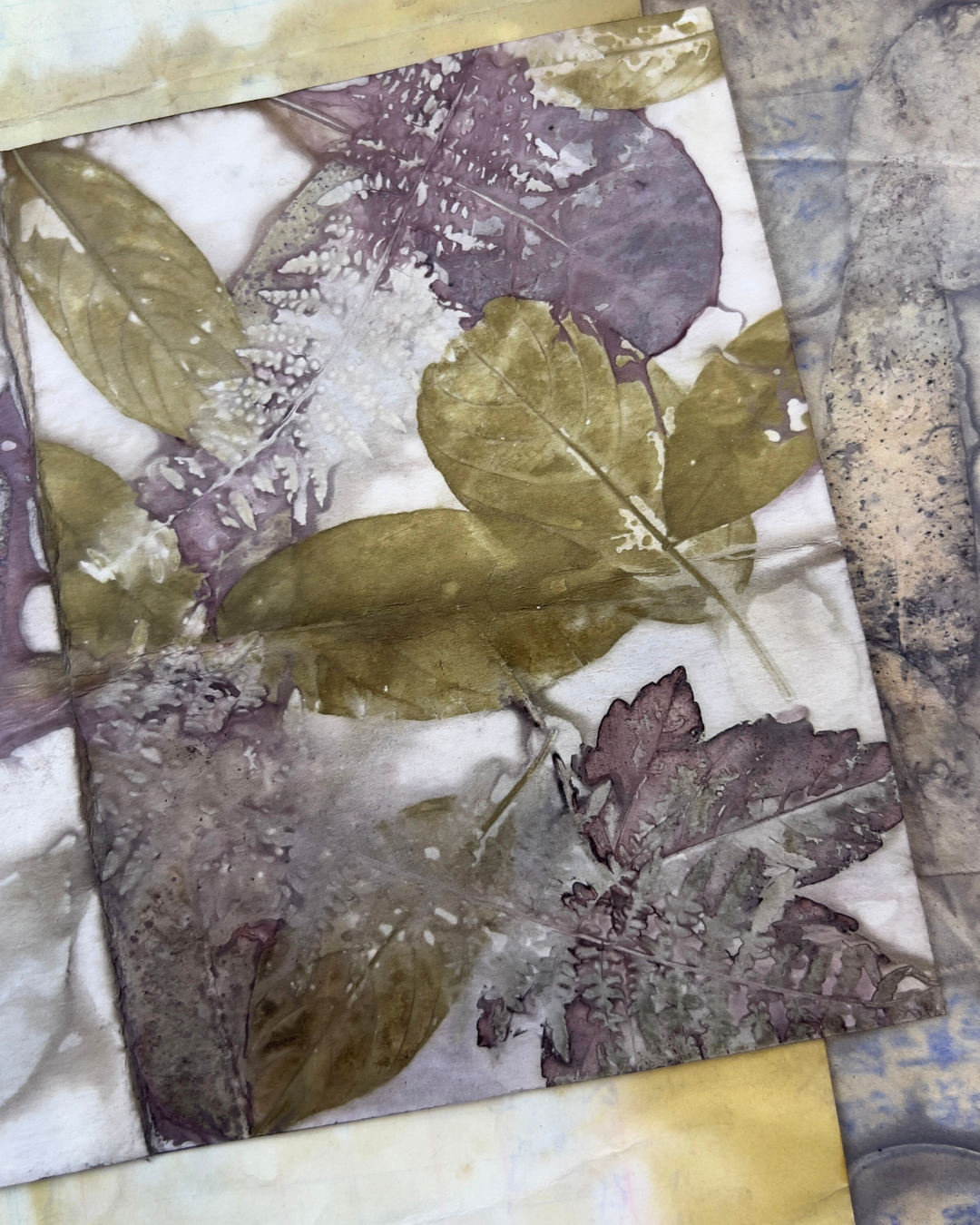
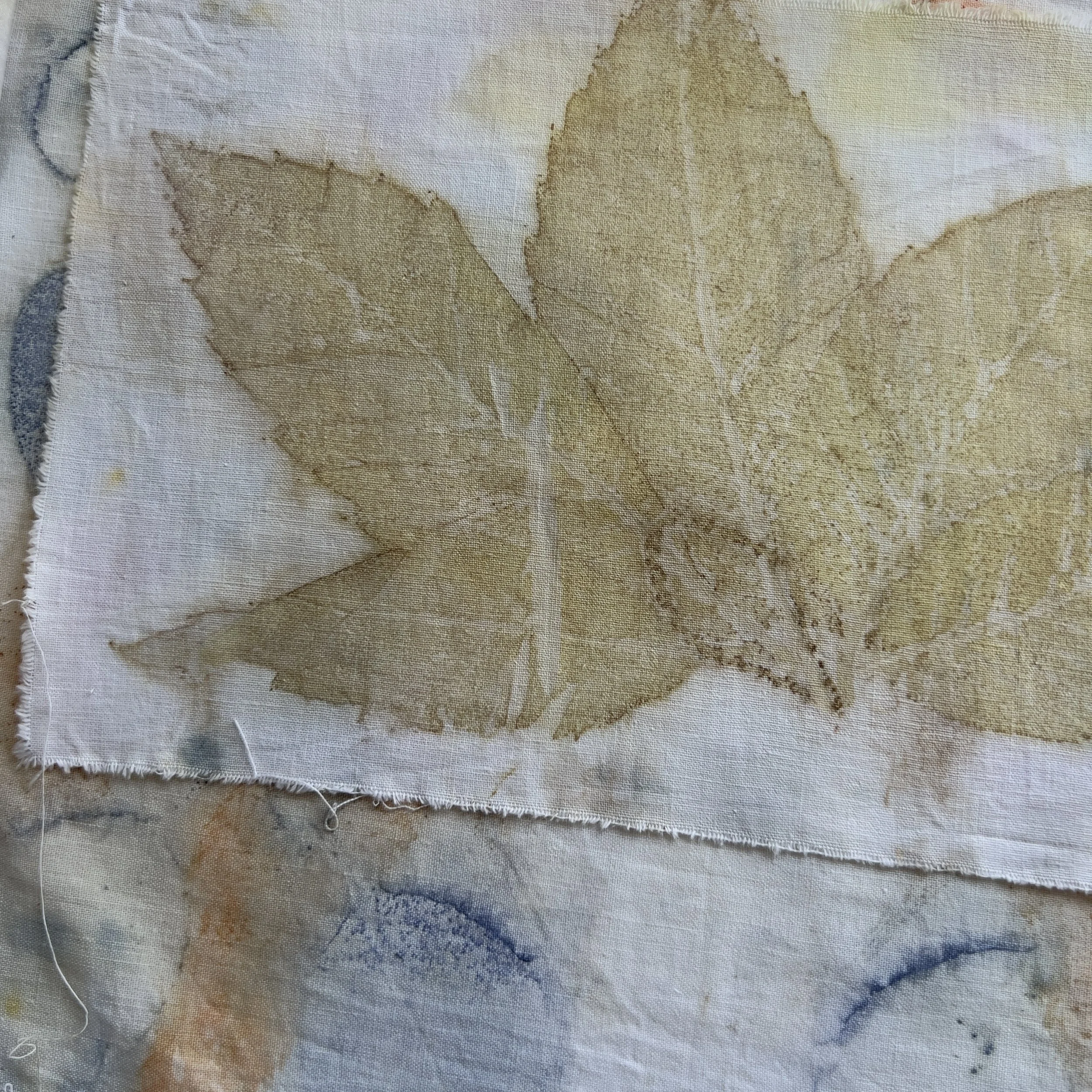
In ecoprinting, also called botanical printing, plant material sits against paper or fabric and leaves its colour and shape behind. In natural dyeing, we draw colour out of plants into water and use that dye bath on paper or fabric.
Some plants suit both, but it helps to keep two collections: leaves to press and dry for printing, and other materials to save for the dye pot.Ten materials worth looking for
Five leaves to collect for ecoprinting
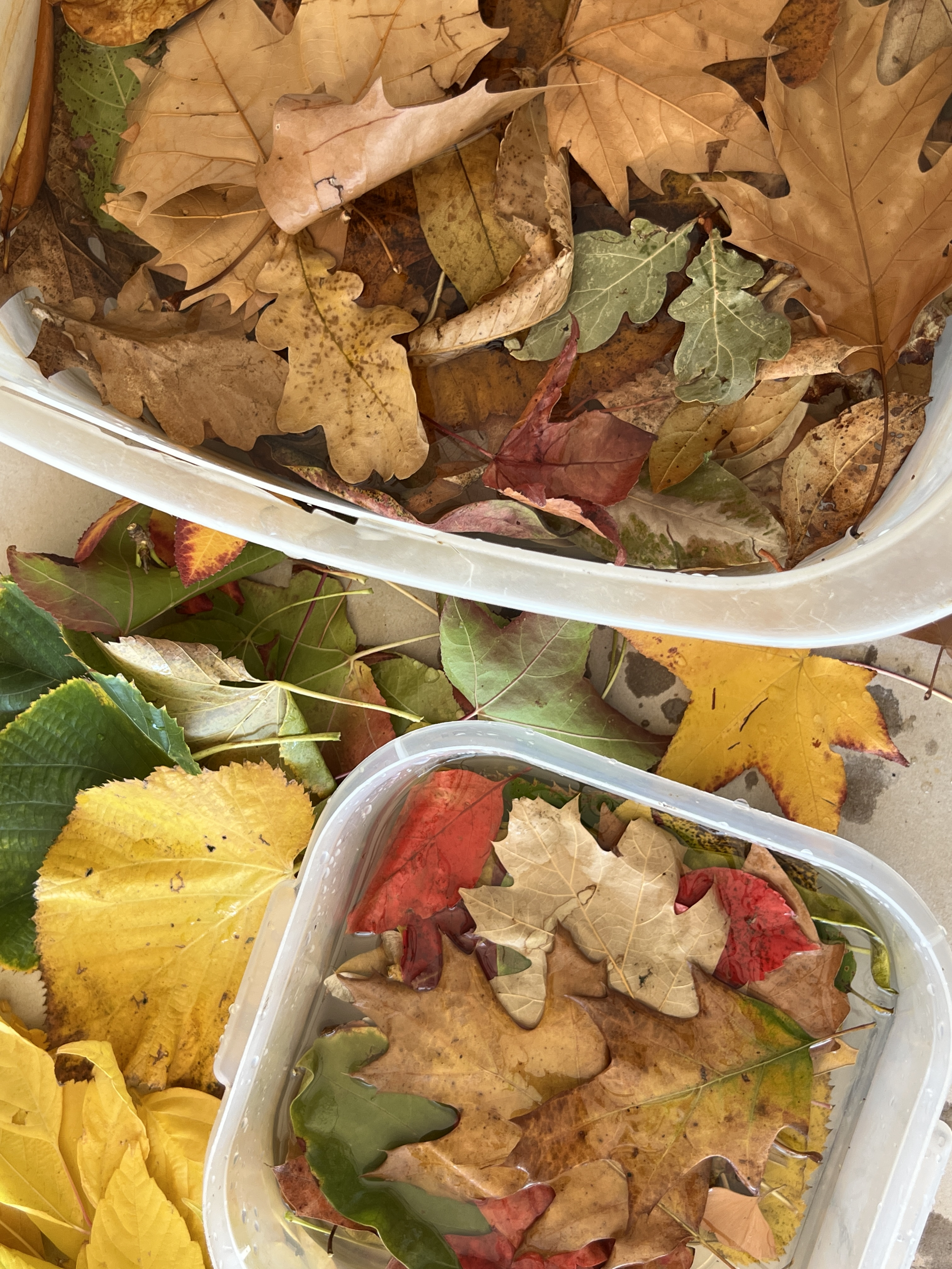
1. Oak leaves
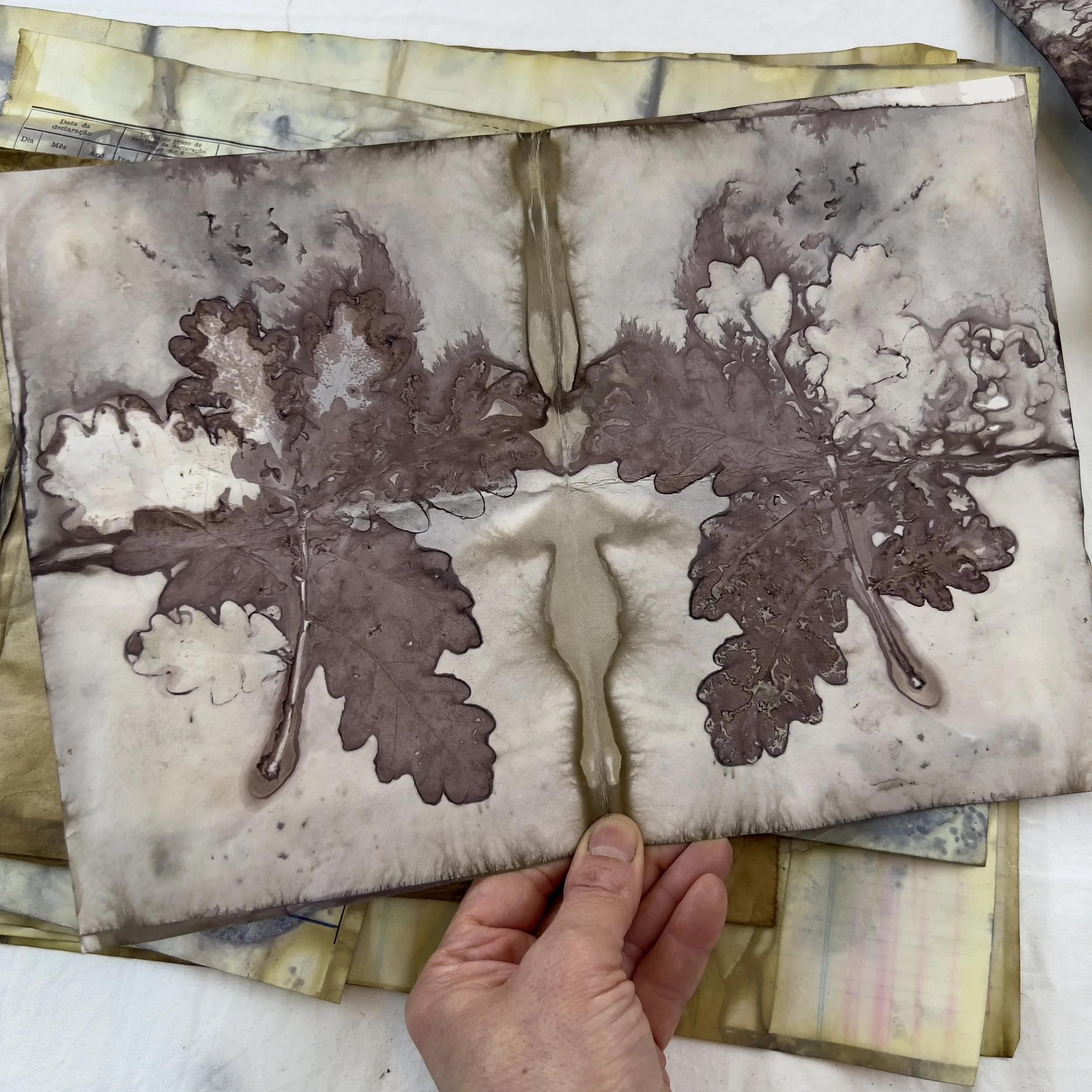
One of the first trees I look for. Take a few leaves from a tree you know and keep them together. If you gather from several oaks, label each collection separately, because "oak" covers many species.
Good for: printing.
To keep: press and dry, then store flat in labelled paper envelopes.
2. Sweet chestnut leaves
Long, toothed leaves that are lovely to look at before you do anything with them. Check that you have sweet chestnut and not horse chestnut. The names sound alike, but the plants are different.
Good for: printing.
To keep: press and dry in a single layer, apart from your other leaves.
3. Liquidambar leaves
Also called sweetgum, with star-shaped leaves that are easy to mistake for maple. Identify the tree while you're standing next to it, and take a photo of the tree and its leaves so you can match them later.
Good for: printing.
To keep: press, dry and label as liquidambar, not maple.
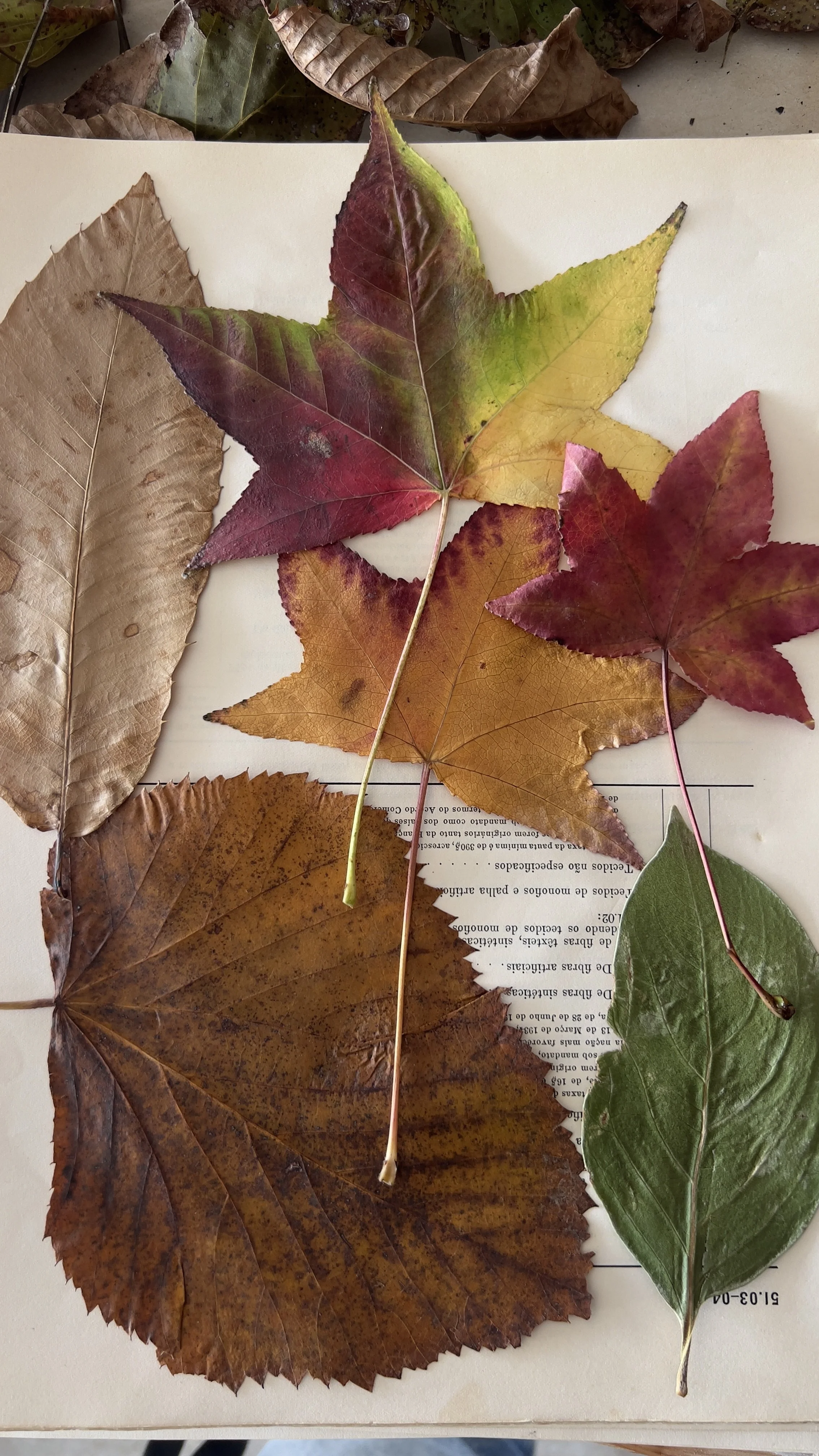
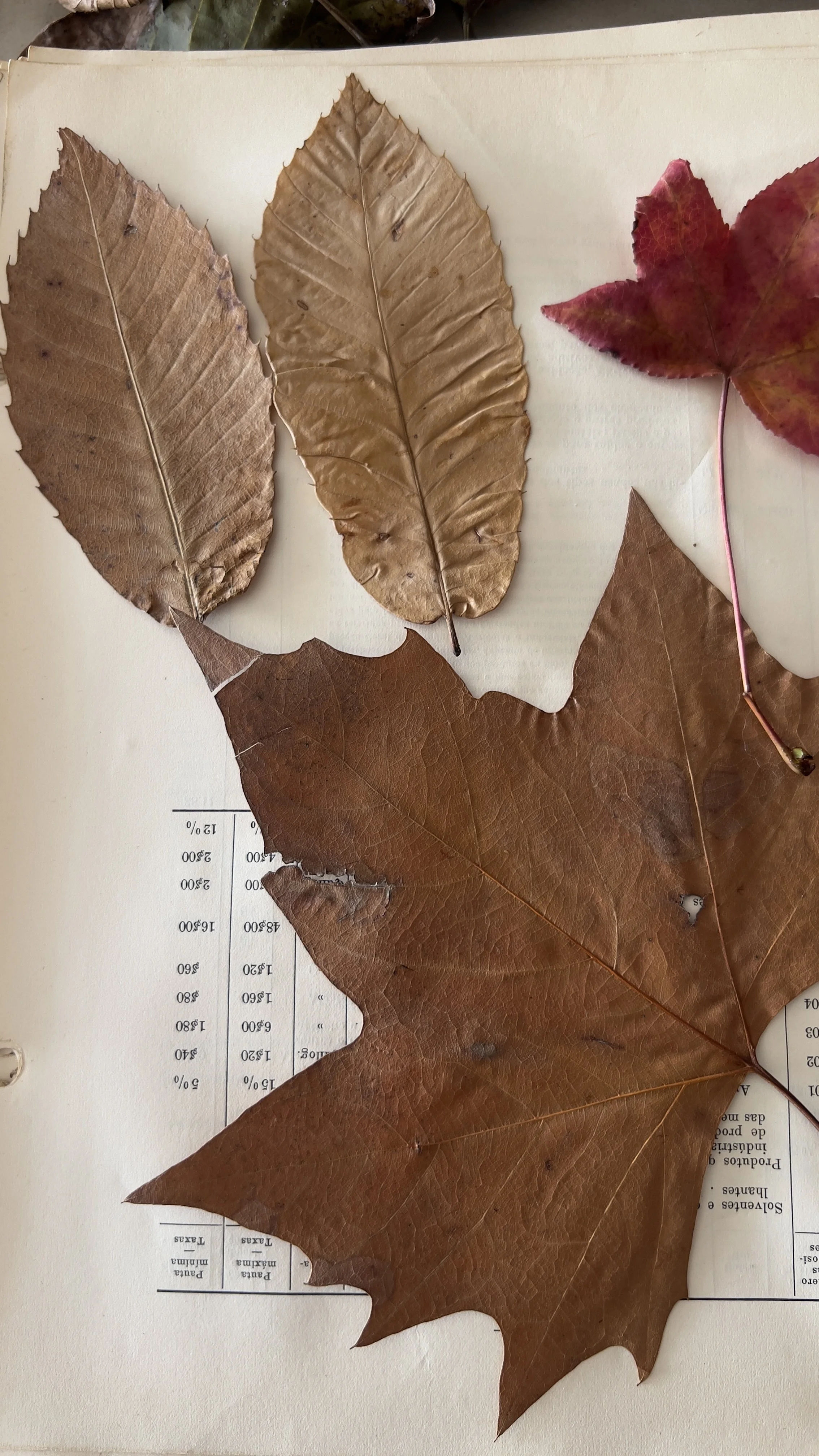
4. Maple leaves
Maples come in many species, and between them they give you a lot of shapes. You don't need to travel for the perfect one. A maple you can identify nearby will teach you what that tree offers.
Good for: printing.
To keep: dry flat and note where you found them.
5. Rose leaves
The flowers may be over, but the leaves are still there. If you have roses in the garden, you may have a printing material right outside your door.
Good for: printing.
To keep: press and dry. Skip any leaves that were recently sprayed.
A red leaf doesn't promise a red print. What appears depends on the plant, the surface and how you prepare it, so treat every collection as a small experiment and keep notes.
Five things to collect for the dye pot
A word on tannins
You'll hear me mention tannins whenever we work with natural colour. They are compounds found in leaves, bark, fruit skins and galls. A strong cup of tea has them too, and that dry feeling in your mouth is what they feel like.
In dyeing, tannins can add colour of their own, they darken when they meet iron, and they help prepare cotton and linen for some aluminium mordant methods. They are not all the same. Some add almost no colour, while others leave a yellow or brown tone that becomes part of the result.
That is why a handful of leaves, a handful of acorns and a measured amount of gallnut extract can't swap places in a recipe. And a plant isn't automatically at its richest in autumn. The real reason to gather now is simply that some of these materials are around now and may not be later.
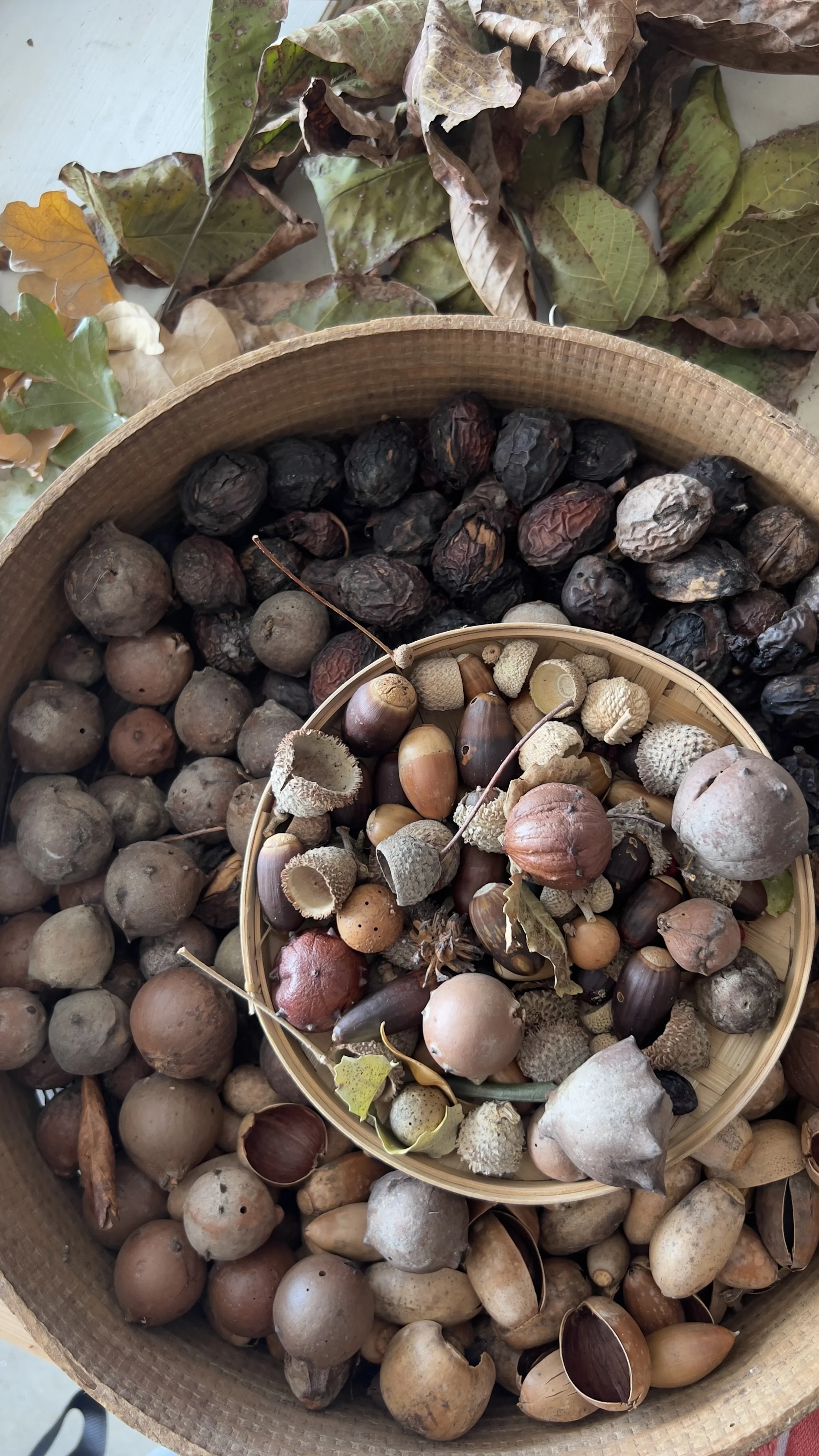
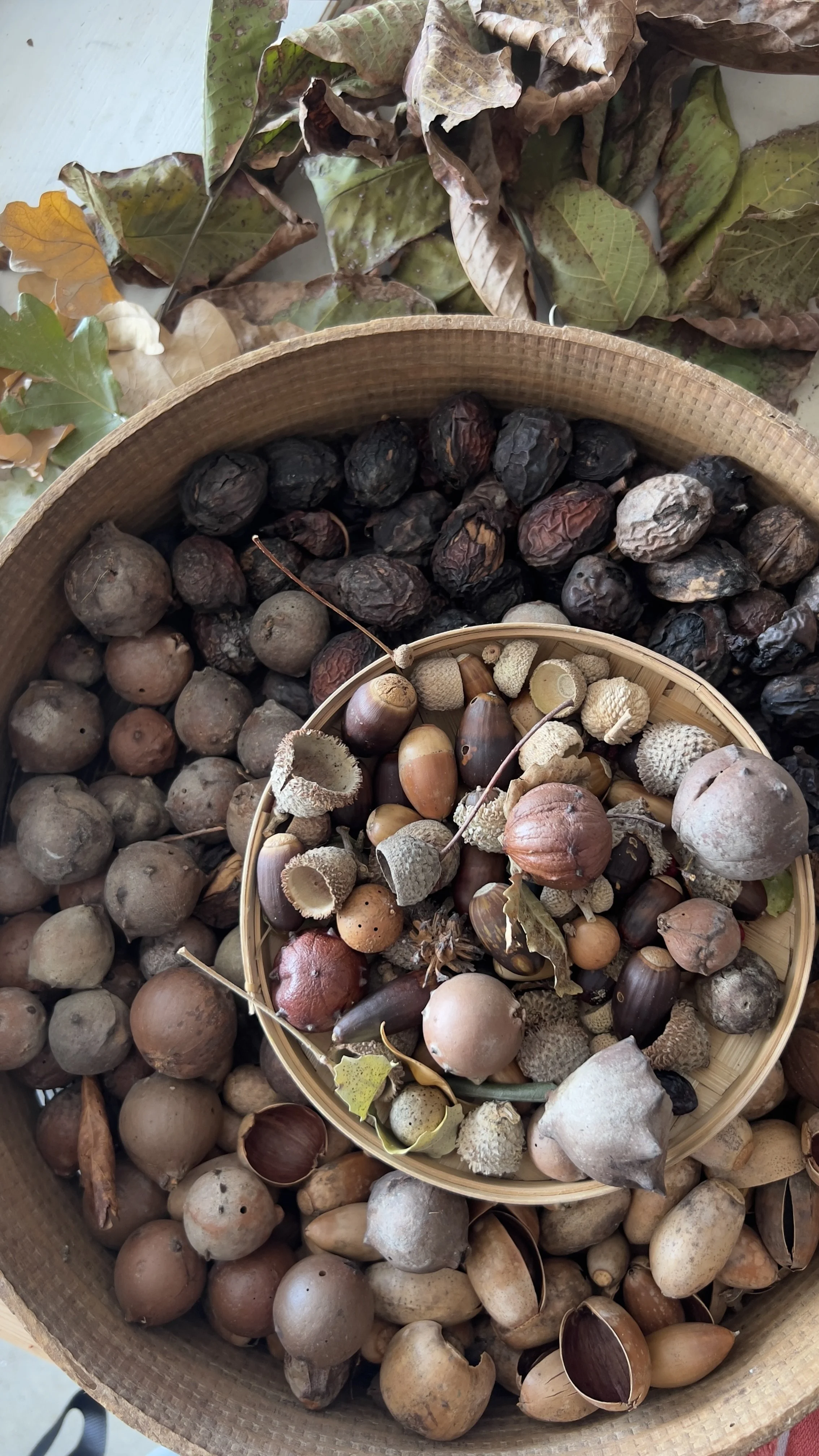
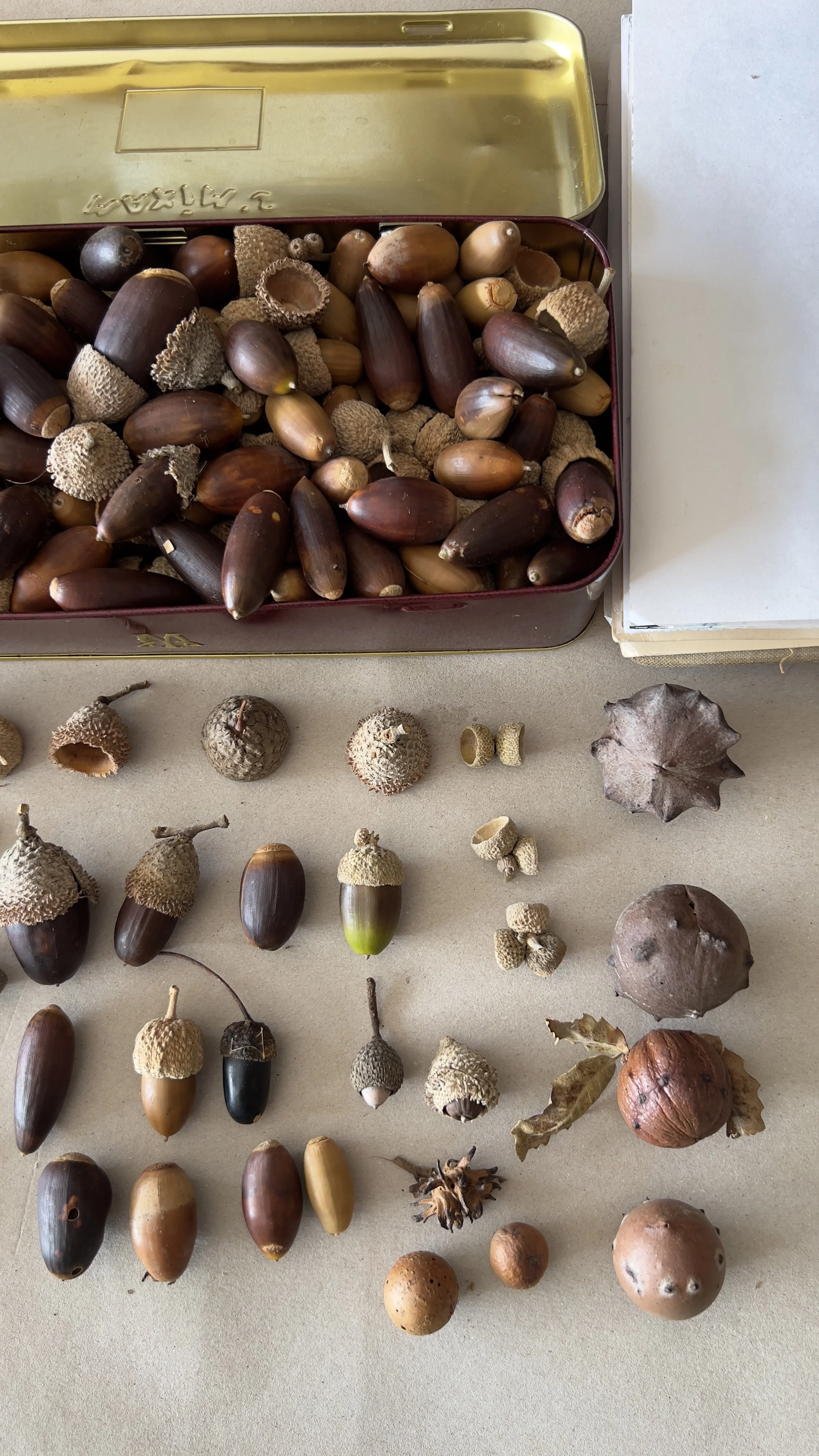
6. Acorns and their cups
Keep them apart from your leaves. They are for the dye pot, and they respond differently depending on how you prepare them. Take only a modest amount where they are plentiful, because wildlife needs them too.
Good for: dye baths.
To keep: air-dry in a single layer with good airflow. When completely dry, store in a breathable container and check now and then for damp.
7. Oak galls
Galls are not acorns. They are growths the tree forms, often in response to insects, and some are very rich in tannins. Shape and tannin content vary a lot. If you can identify them, collect old ones that are already empty and leave occupied ones where they are.
Good for: tannin preparations and dye experiments, with a recipe that suits them.
To keep: dry thoroughly and store separately with a label.
A recipe written for concentrated gallnut extract won't work with the same weight of galls you gathered yourself. Keep that in mind when you start to use them.
8. Onion skins
This collection can begin while you make dinner. Save the dry, papery outer skins, with yellow and red in separate bags so you can try them one at a time. You don't need to buy onions for this. Just stop throwing the skins away.
Good for: dye baths.
To keep: dry skins in a paper bag, away from moisture. Leave out any damp bits of onion.
9. Pomegranate peel
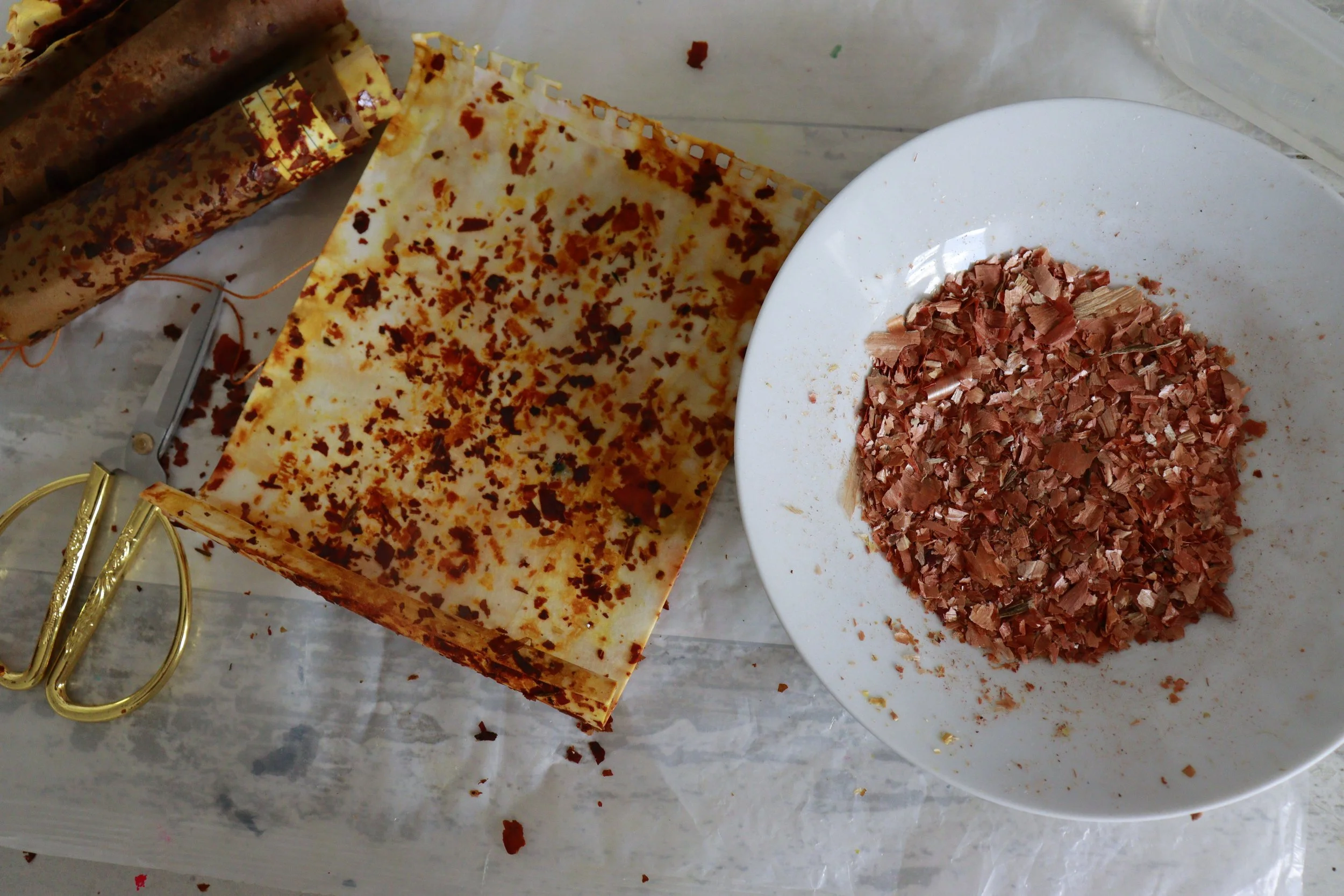
If you eat pomegranates, keep some of the peel. It is rich in tannins, but it also brings its own colour, which matters if you're thinking of using it to prepare fabric as well as to dye.
Good for: dye baths and tannin experiments.
To keep: remove any remaining fruit, cut the peel into small pieces and dry completely before storing.
10. Walnut shells
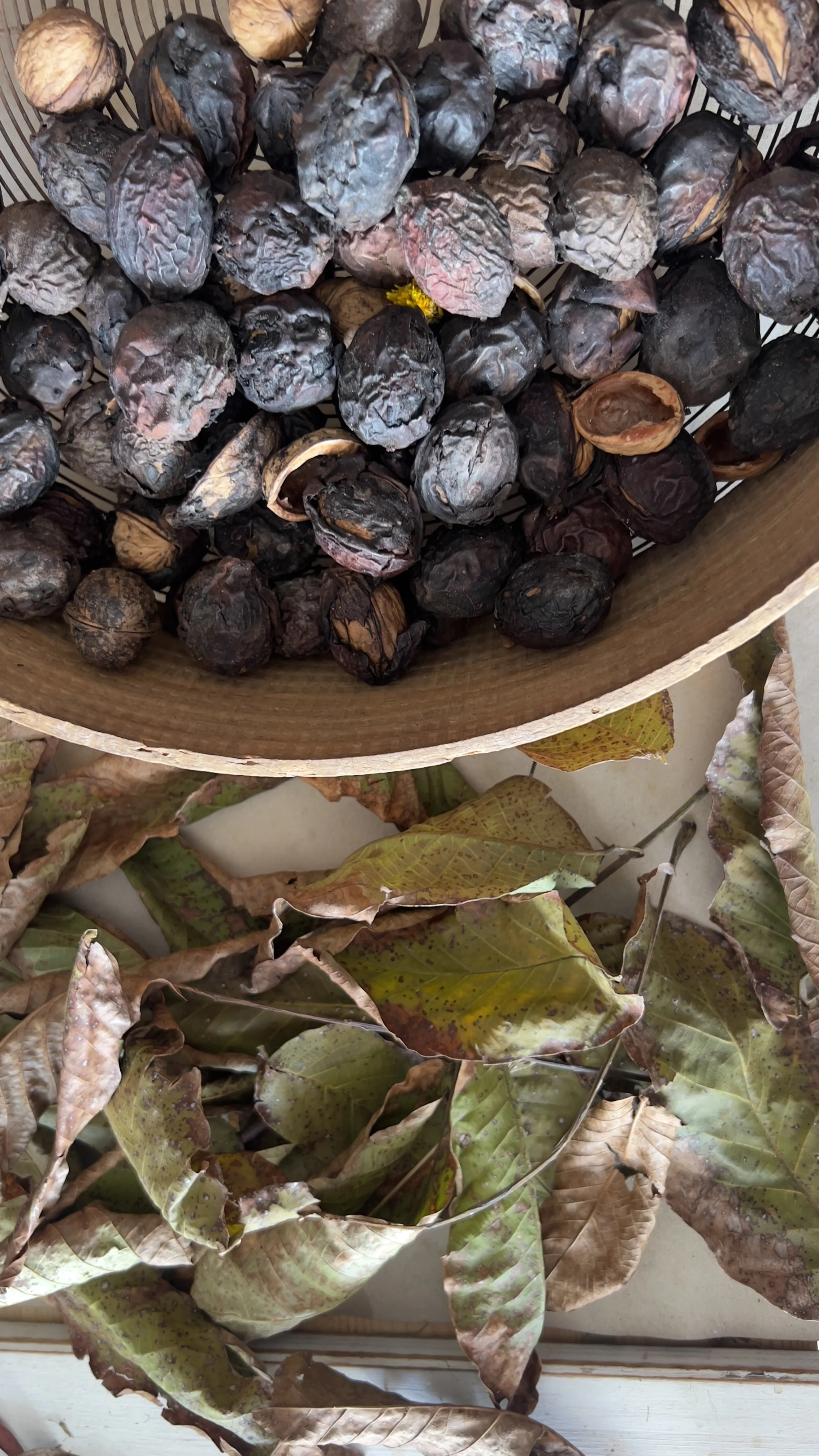
A friend of mine is sending me a whole bag of walnut shells. So here is my advice: put your friends and family to work for you too! Tell them what you're looking for. Onion skins, pomegranate peel and walnut shells may already be passing through their kitchens, and what they were about to throw away could be a treasure to someone who paints with nature. Ahahaha!
One thing to be careful with: the hard shell around the kernel is not the same as the soft green-to-brown hull that surrounds the fruit. Many walnut dye recipes call for the hull. The shells I'm collecting are something I'll test separately, and I wouldn't use them as a direct swap in a hull recipe.
Good for: separate, labelled dye experiments.
To keep: remove any food remnants and dry completely. Label whether you have shells or hulls.
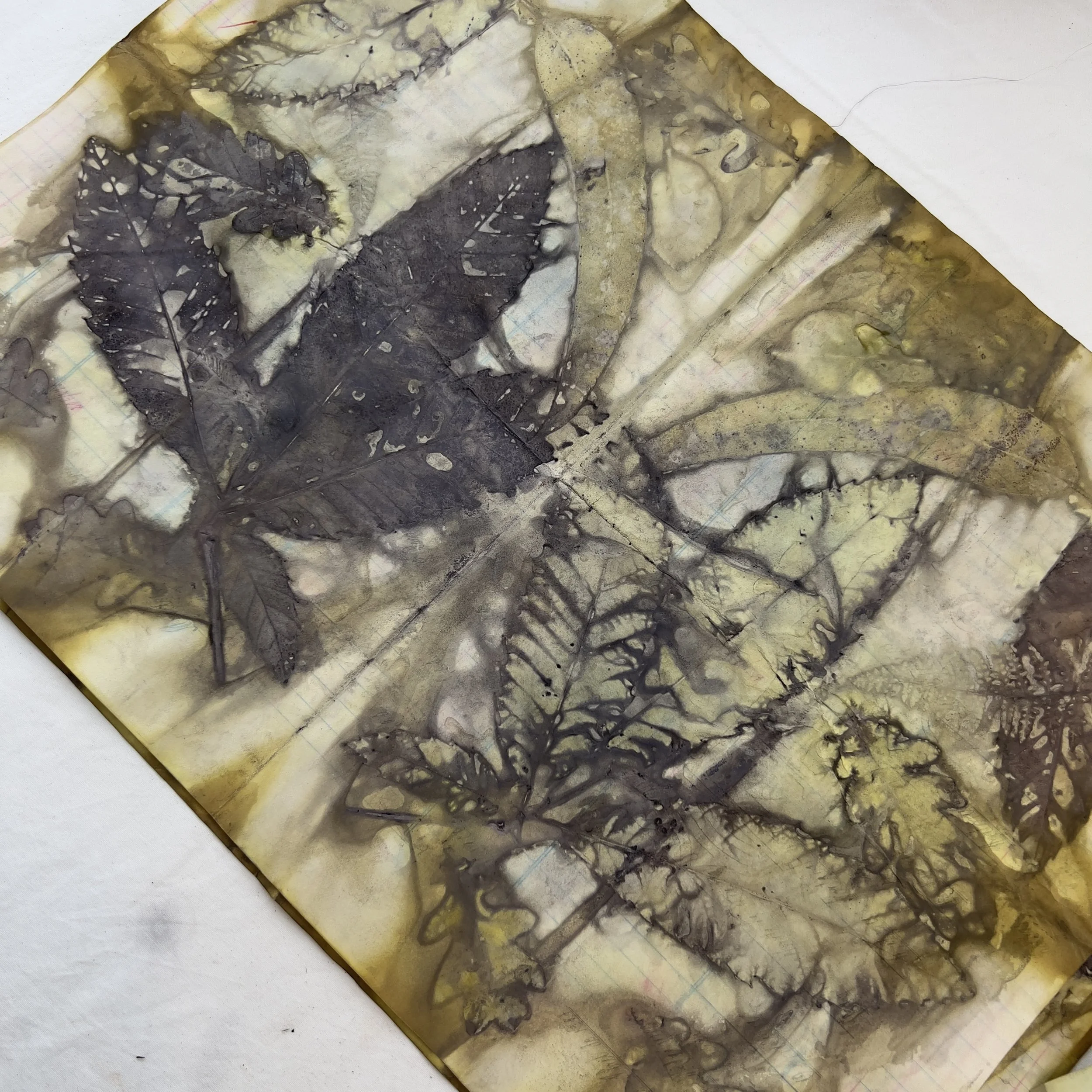
Paper is my favourite surface for ecoprinting, while fabric is my favourite for dyeing. I love bringing both together in collage and artist books.
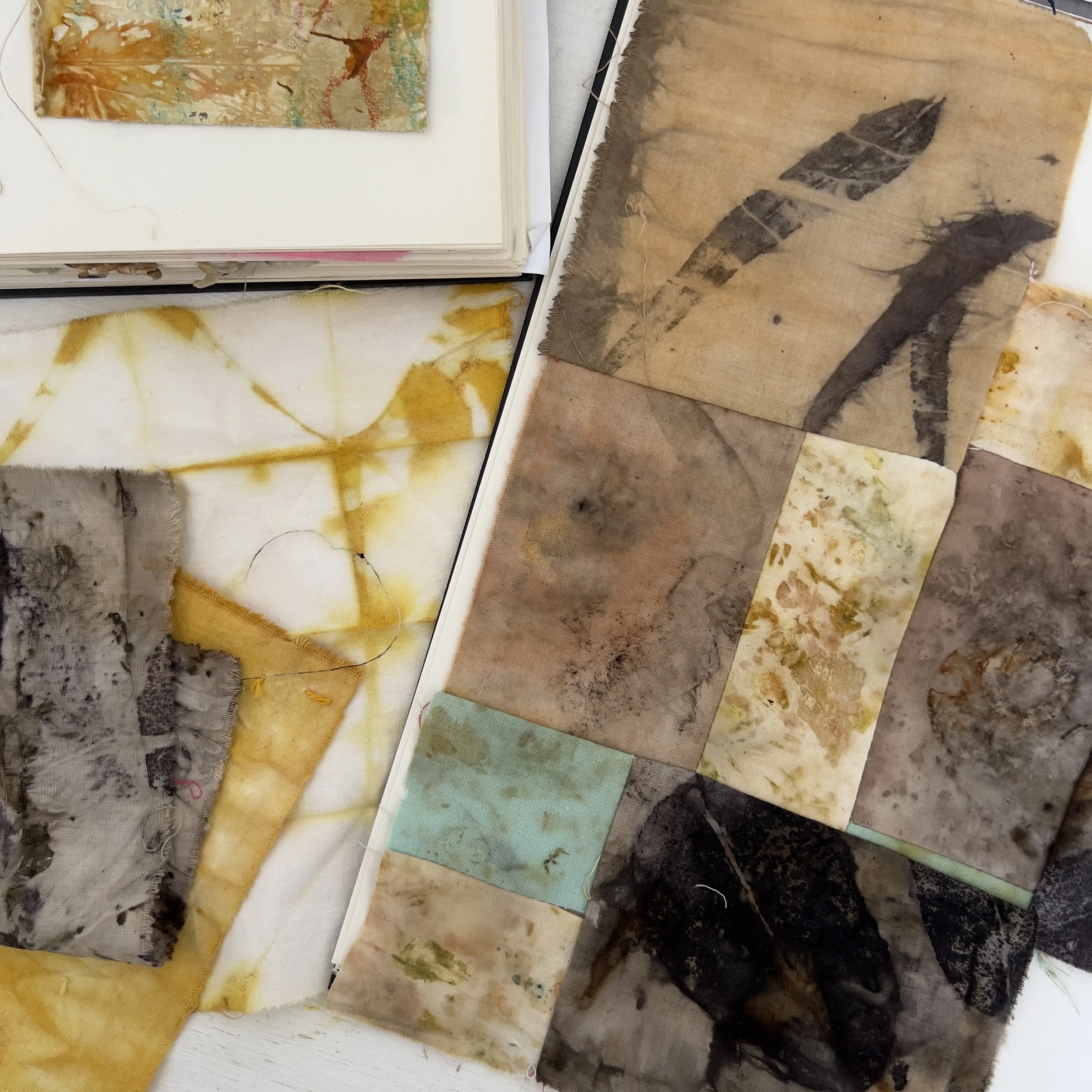
From gathered materials to your own artwork
What interests me is what happens after the collecting too.
We make a print or discover a colour, and then there is this new piece of paper or fabric on the table. We can tear it, layer it, stitch into it, combine it with something else or give it a place in a book.
That is the work we explore inside Wild Creative Lab, my online art membership.
We create with nature through mixed media, ecoprinting, natural dyeing, collage and artist books. There are lessons to work with in your own time, guest artists bringing their approaches, and our Wild Circle gatherings where we share questions and create together.
You can adapt the projects to the materials you enjoy. If you prefer paper to fabric, or want to take an idea into a journal, there is room for that.
For November 2026, Izabela Tysver brings us Roots of Expression, working with gathered materials, painted marks and stitches to explore roots and belonging. In December, The Winter Dye Pot begins our Cycle of Stillness, with natural dyeing on paper and fabric.
So the things we gather now will have somewhere to go.
For now, what are you collecting? And have you persuaded anyone else to save things for you yet? 😁
Have fun creating with nature and let yourself be inspired by her.